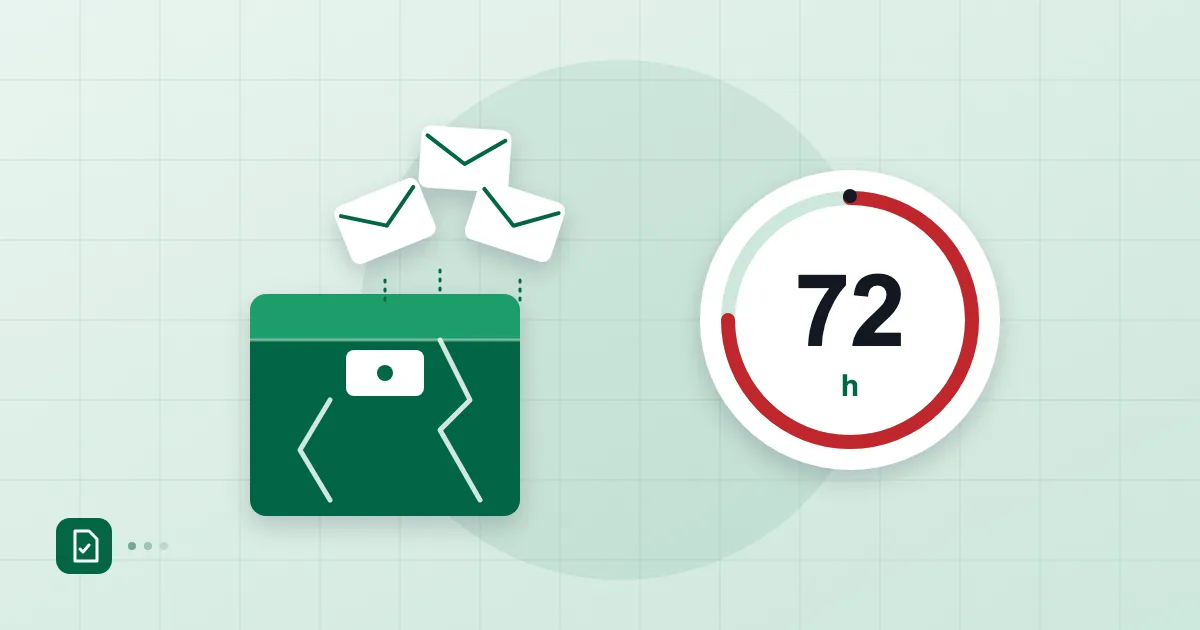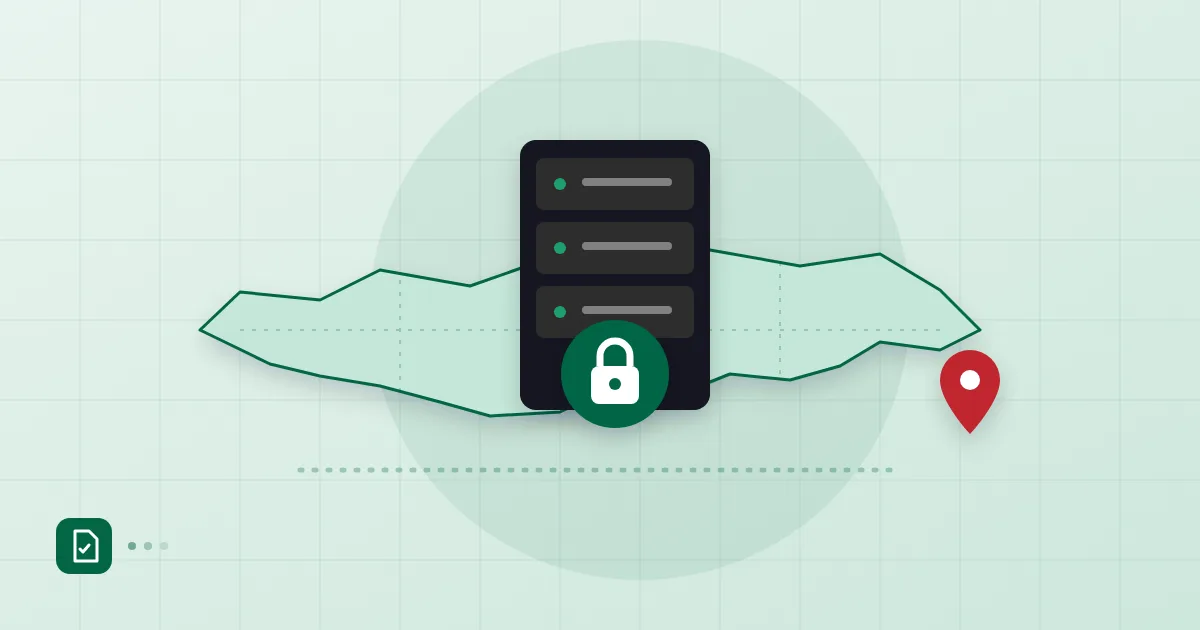
Sooner or later someone asks where your company email physically lives. It might be a customer's procurement team, an auditor, or a single clause in a contract draft. Data localization email is the polite name for the answer: your messages, attachments, calendars and contacts stay on infrastructure inside one country, in this case Turkey.
This article explains what that does and does not give you, and offers a list of questions you can put to a provider in writing. We are deliberately sticking to things you can check rather than things a sales page can claim.
Short answer: Keeping email data in Turkey means the primary data and its backups sit in data centers inside the country. It does not make you KVKK compliant by itself, but it removes most cross-border transfer questions and makes audits easier to answer. Judge a provider on who can access the data, where backups go and how support works, not only on the server's location.
What data localization email does and does not mean
Data localization means data is stored and processed on infrastructure within a particular country's borders. For email that includes mailbox content, attachments, calendar and contact records, and backups. "Our main server is in Turkey" is not enough of an answer.
The misunderstanding we run into most often: a Turkish-language control panel, invoices in lira or an office in Istanbul tell you nothing about where the data lives. Backups may replicate to another region. A search index may sit somewhere else. None of that appears on a homepage.
The opposite error is just as common. Data sitting in Turkey does not mean the risk has gone away. If a mailbox is compromised, a password is weak or an employee auto-forwards everything to a personal account, the server's address will not save you. Localization is one layer. It does not replace security.
Which sectors are asking for in-country hosting?
The people who ask most are suppliers who handle their own customers' data: accounting and tax advisory firms, healthcare-related service providers, law offices, and software or consulting companies that sell to public bodies and large enterprises. The common thread is that their inbox contains someone else's personal data, and the other party pushes its obligations down to them by contract.
Some sectors have regulations that add their own in-country storage requirements. We will not generalize about those; check your sector's rules and the contracts you have signed. What we can say is this: when a contract says "data is kept in Turkey", include email in that scope. People remember the ERP and the CRM and forget the mailbox, yet quotes, contract annexes and ID scans travel through it every day.
Here is a quick check we suggest: ask your own team, "where exactly do our emails sit today?" If the answer is "probably Turkey", you hold a guess, not information. Turning that guess into a written answer takes ten minutes and saves time in every contract conversation afterwards.
The legal dimension: transfers and responsibility
Under Turkey's data protection law (KVKK), transferring personal data abroad follows specific rules. Article 9 was amended in 2024 through Law No. 7499, introducing routes such as adequacy decisions, appropriate safeguards like standard contractual clauses, and limited exceptional cases. The authority's own page on transfers abroad is the place to check the current position. We also cover the topic in more depth in KVKK cross-border data transfer and email.
In practice: if your mailboxes sit on a foreign server, storing and accessing them is itself a transfer question. Keeping the data in Turkey removes most of that question. We say "most" because it returns if the provider reaches in remotely from abroad or relies on sub-processors elsewhere.
Responsibility works in a similar way. You are normally the data controller; your email provider is the processor. Choosing a provider does not hand your responsibility over. That is why documenting the choice pays off if there is ever an incident or an audit. For incidents see KVKK breach notification and the 72-hour question, and for retention see how long company email should be kept.
The operational dimension: access, support, timelines
A clean legal picture on paper still has to survive daily operations. Look at three things.
First, access. Under what conditions can the provider's staff open your data? When you file a support ticket, who looks at your records, and where do they work? Second, backups. A backup is data too. If the primary system is in Turkey but the backup is elsewhere, the localization story is half told. Third, timelines. When an auditor or customer asks for a specific thread, or you must delete a departed user, how quickly can you do it?
One small everyday benefit is worth mentioning: support in your own language and time zone. During an outage that matters more than any diagram.
There is a time dimension as well. When a customer requests an audit, you may need to answer "which user accessed which data on which date?" Find out in advance whether your provider keeps such records, whether it will hand them over and how quickly. Learning that during an incident is far more painful than learning it now.
Eight questions to ask a provider
Ask these in writing, and expect the answers in an email or the contract rather than on a call.
- In which country and data center is the primary copy of mailboxes, attachments, calendars and contacts stored?
- Where are backups kept and how often are they taken?
- Do side services such as search indexing, spam analysis or virus scanning send data to another country?
- Do you use sub-processors, and if so, who and where?
- Can the servers be accessed from abroad, under what conditions, and is that logged?
- Is data encrypted at rest and in transit?
- If I leave, how and how fast can I export my data, and what happens to it afterwards?
- In a security incident, how soon and through what channel will you tell me?
People skip the eighth question, yet notification clocks start on your side. If the provider tells you late, the deadline does not move.
Documenting the decision
Whichever provider you pick, keep a one-page note: which questions you asked, which answers you received and on what date. It is not a certificate, but when a customer or auditor asks how you assessed this, you have something concrete to show. For companies selling into the EU, our piece on NIS2 and GDPR for Turkish companies covers the neighboring obligations, and if you are wondering about long-term cryptographic risk, post-quantum cryptography and email treats it without hype.
At Postanex, data is stored encrypted in data centers in Turkey, mail is backed up daily and the infrastructure is monitored around the clock. Still, ask us the same eight questions. A good provider is not bothered by them.
This article is for general information and is not legal advice.
Frequently asked questions
Is storing email in Turkey enough for KVKK compliance?
No. Data location is one important piece, but compliance also covers notices, legal grounds, access rights, retention periods and breach handling. Treat location as a foundation, not a finish line.
Do backups also have to be in Turkey?
Backups contain personal data too. Keeping the primary system in Turkey but sending backups abroad brings the transfer question back, so ask the provider to state backup locations explicitly in writing.
Does this rule out Gmail or Microsoft 365?
Not automatically. You can use them if you can document the transfer basis and show the setup fits your customer contracts. Our comparison of Google Workspace, Microsoft 365 and regional email lays the options side by side.
Do I have to change my domain name?
No. Localization is independent of your domain. The domain stays at its current registrar and only a few DNS records point mail to the new service.
- data localization
- KVKK
- email hosting
- data residency