Two kinds of people type "free business email" into a search box. One is a founder counting the first month's income who does not want another line item. The other is a sole trader who has used the same Gmail address for years and has just realised that info@yourcompany.com would look better on a quote. Both are right to ask.
This article covers what free options give you, what they leave out, and when free is genuinely enough. We sell paid email, yet we will tell you plainly that not everyone needs it.
Short answer: Free business email usually comes with a small quota, limited support, sending caps and uncertain continuity. Using your own domain solves how you look, but it does not guarantee deliverability or control over your data. It can be fine for one person with low volume. Once customers, a team and invoices depend on it, paying tends to be cheaper than the problems.
Types of free options
"Free business email" is not one product; it is a label stuck on several different arrangements. Figure out which one you are looking at before you decide.
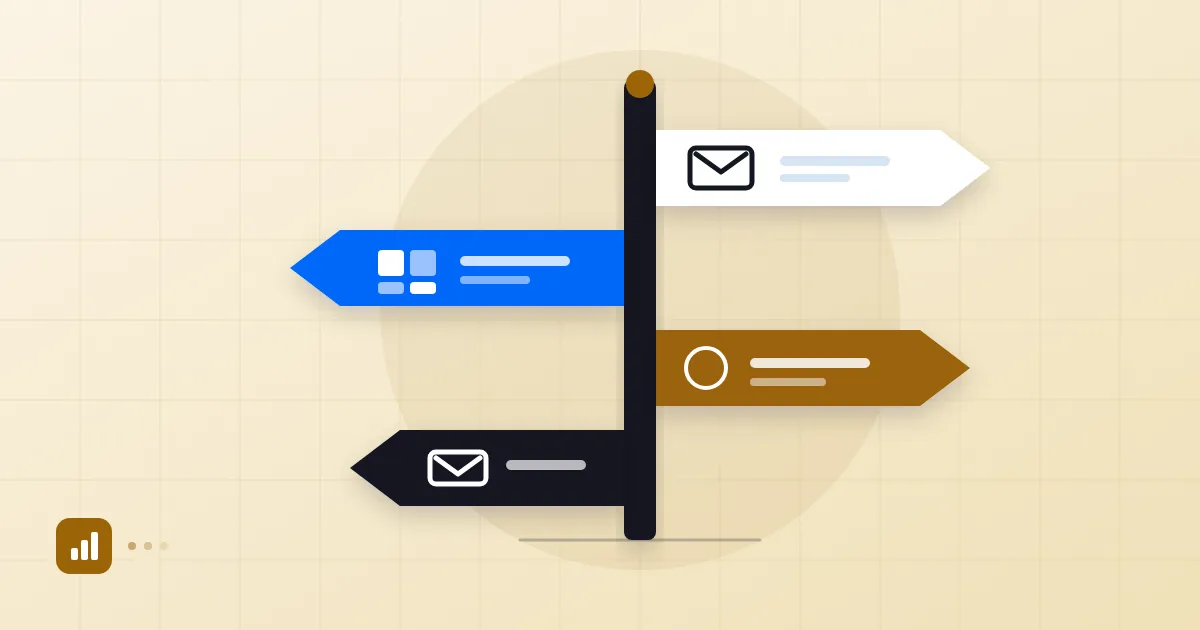
The first is the small bundle that comes with a domain. A registrar adds one or a few mailboxes with a tight quota. The second is a forwarding service: mail sent to info@yourcompany.com is passed to an existing personal inbox, and when you reply you either send from the personal address or configure a send-as setting. The third is a free tier of a cloud service; those change over time, so check the provider's own page for current terms. The fourth is running open-source mail software on your own server: the software is free, the time and responsibility are not.
We are not knocking any of these. We are saying each has a different price tag.
Typical limits: quota, ads, support
The limits of free plans tend to show up in three places. First, quota. Storage is small, fills with attachments within a year, and when it is full incoming mail bounces. Second, sending limits: the number of messages per hour or per day is capped, and a quote sent to twenty people at once can get stuck. Third, support: when something breaks, you may have a forum or a help article and nobody to ask.
Some free services also show ads, either in the interface or under outgoing messages. That lands directly on your reputation. A company that writes from its own domain and carries somebody else's advert in the footer does not look established.
Deliverability and reputation risk
This is the least noticed limit and the one that costs the most. On shared infrastructure, many domains send from the same addresses. A neighbour who sends spam can hurt your delivery rate, and you have no way to see it. Your customer says "your email never arrived" and you know you sent it.
We cover the usual reasons for mail landing in junk in why emails go to spam; on a free service you control few of them. Can you publish SPF, DKIM and DMARC records for your domain, and are outgoing messages signed? Ask before you commit, not after.
Continuity and data portability
A free service is one whose terms can change without much notice. Conditions are updated, free tiers disappear, quotas shrink. That alone is not wrong. What hurts is having years of correspondence trapped inside.
So check a few things. Is IMAP access available, meaning can you copy the mail elsewhere? Is the domain registered in your name? Can you export the mailbox? If the answers are yes, starting free can be a safe move because the exit is open. How the copy itself works is covered in migrating email over IMAP.
When free is enough
Honestly, often. A one-person consultancy, a new company with no customers yet, an association's contact address: volume is low, attachments are small, there is no team. In that situation, spend your effort keeping the domain somewhere reliable and begin with forwarding.
When free is enough, these conditions usually hold together: a single user, low volume, email not central to how work gets done, and a way to take your mail with you when you leave.
Signs it is time to pay
What we see in the field:
- Customers begin to say your messages landed in spam.
- Several people share the same
info@address and nobody knows who answered. - The quota is full but you cannot delete old threads because they work as evidence.
- You want the same calendar and contacts on phone, laptop and web.
- You want someone reachable during business hours when something goes wrong.
If two or more apply, it is worth working out what a paid option costs. Our method for per-user cost is in business email pricing. For well-known alternatives, see Google Workspace alternatives and Gmail versus business email.
Postanex charges a simple per-user price with no hidden fees; details are on the pricing page. But the right choice is the one that matches today's need.
Frequently asked questions
Is there really free business email?
Yes, in several forms: small bundles with a domain, forwarding services and cloud free tiers. Each has different quota, sending and support limits, so read the provider's current terms.
Do I still need to buy a domain for free business email?
If you want your own address, yes. The domain is a separate yearly registration. What is free is usually the mailbox, not the domain.
Can free business email land in spam?
It can. On shared infrastructure you share reputation with others, and the risk rises if you cannot set SPF, DKIM and DMARC.
Will I lose mail when I move from free to paid?
Not if you do it properly. With IMAP access you can copy folders and messages to the new system and change the MX record at the end of the migration.
- free business email
- custom domain email
- email hosting
- small business