The complaint is almost always the same, and it arrives a few weeks after a team tightens DMARC: "Some of our customers are not getting our mail, but we changed nothing on our side." They are right. Sending is fine. Somewhere along the way the message was forwarded or passed through a mailing list, and authentication broke on that trip. ARC email authentication was designed for exactly this gap, but it is a mitigation, not a cure.
We will cover what breaks and why, how ARC limits the damage, and what a team that relies on forwarding can actually do.
Short answer: Forwarding changes the sending IP, which breaks SPF; mailing lists alter the subject and body, which breaks DKIM. ARC is a chain of signed notes in which each intermediary records "authentication passed when I received this", and a receiver that trusts the chain can overlook the DMARC failure. Not every receiver does, so ARC helps but guarantees nothing.
Why forwarding breaks SPF
SPF checks whether the IP that delivered the message is authorised in the sender domain's record. When someone forwards mail sent to jane@example.com.tr to a personal Gmail address, the server handing the message to Gmail is no longer yours; it is the forwarder. That IP is not in the SPF record of example.com.tr, so you get spf=fail or softfail.
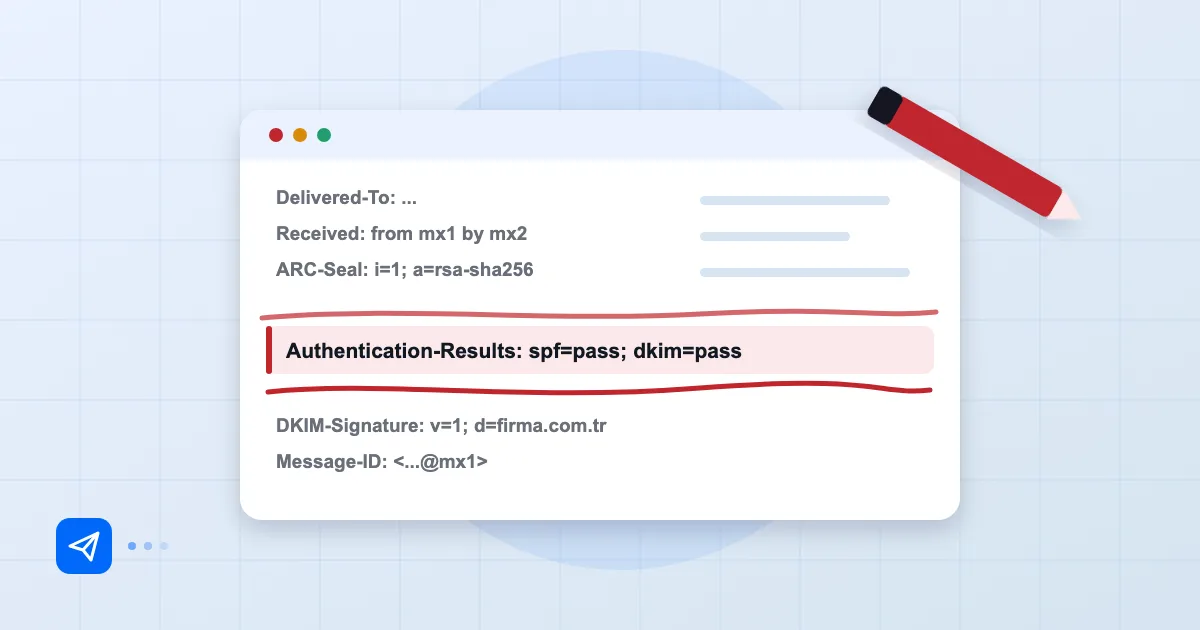
You can see it in the headers; we showed how to read them in our guide to reading email headers. The Received chain shows the forwarding server and the Authentication-Results line shows the failure.
There is a safety net, though: DKIM. As long as the message is not modified in transit, the signature verifies no matter which server delivered it, and DMARC only needs one of SPF or DKIM to pass in alignment. That is why plain forwarding usually survives. Some forwarders also rewrite the envelope sender using SRS, which makes SPF pass for the forwarder's own domain, but that domain does not align with yours, so for DMARC purposes it earns nothing. In practice you lose SPF on forwarding and lean on DKIM.
Mailing lists and DKIM
Trouble really starts with intermediaries that edit the message. A mailing list (an alumni group, an industry association's announcement list) prepends a [List] tag to the subject, appends an unsubscribe footer to the body, and sometimes strips attachments. The signature covers exactly those parts, so it no longer matches: dkim=fail. SPF had already failed. With both down, DMARC fails.
Under p=none that is a red row in a report. Under p=reject, the list message may never reach subscribers. That is why many lists now rewrite the From line, for example Jane Doe via List <list@lists.example.org>. It gets past DMARC, but it hides the real sender address and can muddle replies. Learning to spot these sources in DMARC aggregate reports is the shortest path to knowing which flows are causing trouble.
What ARC is and how it works
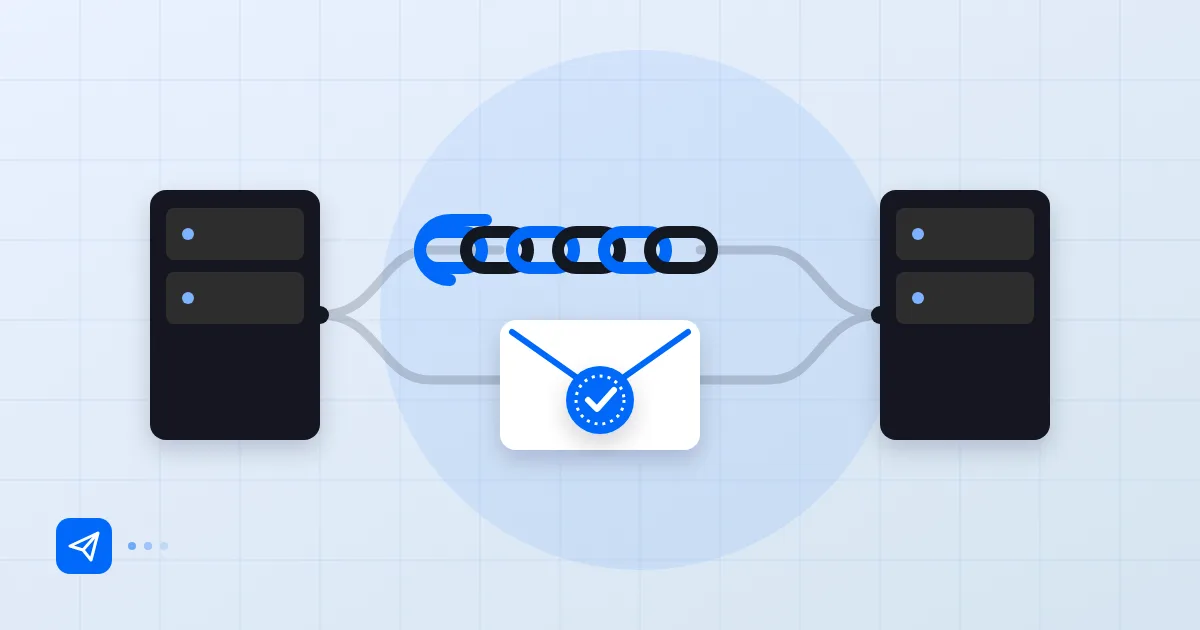
ARC, the Authenticated Received Chain, is defined in RFC 8617, published in 2019 with "Experimental" status: on the way to being a standard, but not a full Internet Standard. The idea is simple. Every intermediary that handles the message records the authentication results it saw on arrival and signs them. The final receiver can then read, in effect: "SPF and DKIM passed at the first hop; then a list got involved."
Each intermediary adds three headers. ARC-Authentication-Results carries the results that server observed. ARC-Message-Signature signs the message as it looked at that point. ARC-Seal seals the integrity of the earlier ARC headers. Each set gets an instance number (i=1, i=2 and so on) so the chain can be ordered.
ARC-Seal: i=1; a=rsa-sha256; cv=none; d=forwarder.example.net; s=arc1; ...
ARC-Message-Signature: i=1; a=rsa-sha256; d=forwarder.example.net; s=arc1; ...
ARC-Authentication-Results: i=1; forwarder.example.net;
  spf=pass smtp.mailfrom=example.com.tr;
  dkim=pass header.d=example.com.tr;
  dmarc=pass header.from=example.com.tr
One detail is easy to miss: ARC does not make the message pass DMARC. It hands the receiver evidence. The decision stays with the receiver.
Who trusts ARC
A receiver gives weight to an ARC chain only if it trusts the domain that sealed it. Anyone can write ARC headers, so receivers tend to keep a list of sealers with an established reputation. Some of the large mailbox providers evaluate ARC, but which provider trusts which intermediary is not a public list, and it can change. Given that uncertainty, "we have ARC, so forwarding is solved" would be a mistake.
If your own server forwards mail for others, the reverse applies. Sealing is not an obligation, but receivers treat forwarders that seal more kindly than ones that do not.
| Scenario | SPF | DKIM | Where ARC helps |
|---|---|---|---|
| Plain forwarding | Breaks | Usually survives | Backup evidence |
| Mailing list (subject tag, footer) | Breaks | Breaks | Main use case |
| List rewrites From | Passes for list domain | Passes for list domain | Not needed |
Practical tips for teams that forward
What we see in the field is that a lot of forwarding exists to cover a need that should not be forwarding at all. A typical case: info@ forwarded to three people's personal Gmail accounts. We do not recommend that. It breaks SPF and it also copies company mail outside the company. Create an alias or group address instead, so the message lands in each person's own mailbox and stays inside your system.
If you must forward externally, do three things. First, make sure your DKIM signature is sound, because that is what saves you. Second, check that the forwarding system does not touch the body; anything that appends "This message was forwarded" breaks the signature. Third, if a user reports lost mail on a forwarded address, look for that source in your DMARC reports.
One more thing: if the destination provider flags forwarded mail as spam, ask the recipient to add the sender to their safe list. Bounces on forwarded mail are a separate matter; we decode them in our bounce codes guide.
Cautions when enforcing DMARC
Before moving to p=reject, collect reports for several weeks and sort the "fails authentication but is legitimate" sources. Lists and forwarders are natural members of that group. We lay out the steps in our guide to moving to p=reject; on the forwarding side the extra point is this: if your staff subscribe to association or professional lists, their posts to those lists may fail DMARC. If that matters, consider a separate subdomain for people who post to lists.
And if you have never published a DMARC record at all, start with our DMARC record setup guide; enforcement comes after.
Frequently asked questions
Does ARC replace DMARC?
No. ARC does not make a message pass DMARC; it gives the receiver signed evidence that the message authenticated on first arrival. Whether to trust that evidence is the receiver's call.
Why does DKIM survive plain forwarding?
If the forwarder leaves the body and signed headers alone, the signature is unchanged and verification does not depend on which server delivers the message. A system that adds a footer will break it.
Should I set up ARC on my own domain?
Only if you forward mail on behalf of others or run mailing lists. Ordinary company mailboxes do not need ARC to send mail.
Will mailing-list mail disappear under p=reject?
It can, or land in spam, when the list message fails both SPF and DKIM. That is why you should look for list sources in your reports before enforcing.
- ARC
- DMARC
- SPF
- DKIM
- email forwarding
- mailing list