Half the headlines about quantum computers say "every password breaks tomorrow"; the other half say "this is twenty years away". Neither is useful. From where we sit, running email infrastructure, the picture is calmer and more practical: some data lives longer than any plausible date for the quantum threat, so a little preparation today makes sense. Post-quantum cryptography is the name for that preparation.
This is not a panic piece. We look at what is at risk, what is not, and what a small business can reasonably do now.
Short answer: A sufficiently powerful quantum computer could break the RSA and elliptic-curve key exchange and signatures used in email today, though nobody knows when. The practical risk is "harvest now, decrypt later": encrypted traffic recorded today and opened years from now. NIST published three post-quantum standards in 2024; for a small business the realistic steps are to take an inventory, ask your provider and keep TLS current.
When the quantum threat arrives and what it breaks
Nobody can give a firm date, and nothing in this article is a prediction of one. What it would break is clearer. Using Shor's algorithm, a large enough quantum computer could solve the public-key systems in wide use today: RSA and elliptic-curve cryptography. Key exchange and digital signatures both fall in that group.
Symmetric encryption and hash functions are in a different position. A quantum computer only weakens them, and longer keys are generally seen as an adequate answer. Data stored under AES is therefore not at risk in the same way. The real target is the public-key part, the piece that sets up the key between two parties and proves identity.
Harvest now, decrypt later
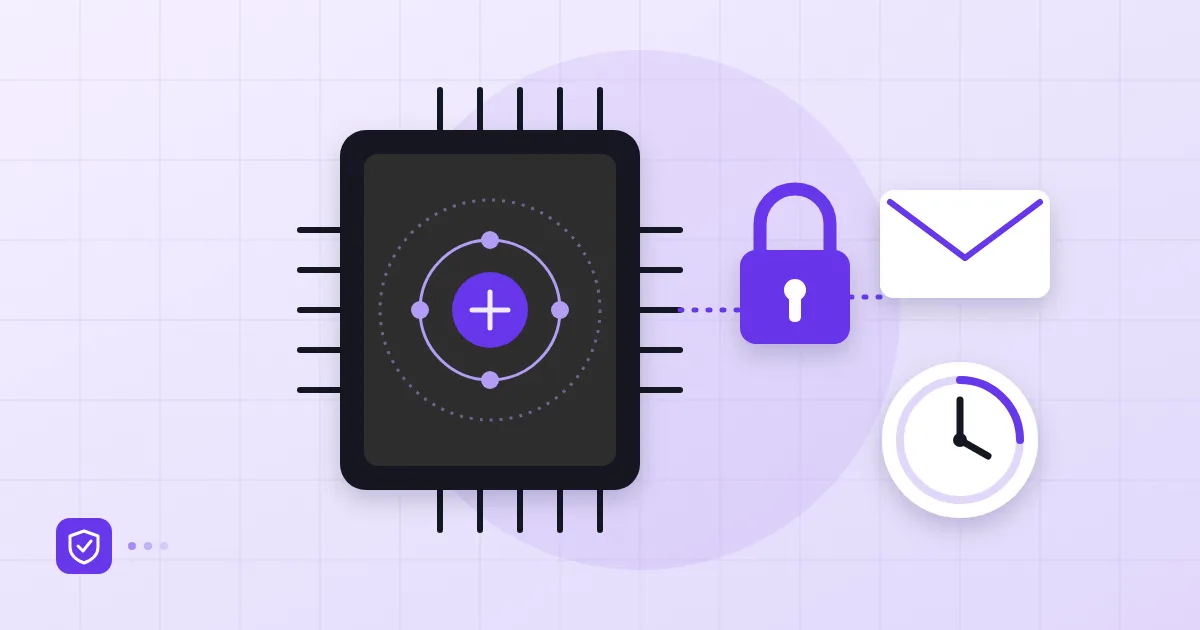
In a harvest-now-decrypt-later attack, an adversary records encrypted traffic today. They cannot read it, but they keep it. Years later, when quantum capability arrives, they open the archive. So the risk is measured not from the date the threat arrives but from how long the data needs to stay secret.
A marketing announcement surfacing in ten years bothers no one. A contract draft, staff records, a patent filing or a message containing health information is different. If such a message was recorded in transit today and its confidentiality still matters in fifteen years, there is a problem. Most small businesses have only a limited amount of such correspondence, but not none.
We suggest one test question: "What happens if the content of this message ends up with a competitor or a government agency in ten years?" If the answer is "nothing much", you are not in a hurry. If it is "that would hurt", flag that correspondence separately in your inventory.
The algorithms NIST selected
In August 2024 NIST published three standards. NIST's post-quantum cryptography page lists them and the current state of the process.
| Standard | Algorithm | Used for |
|---|---|---|
| FIPS 203 | ML-KEM | Key encapsulation (key exchange) |
| FIPS 204 | ML-DSA | Digital signatures |
| FIPS 205 | SLH-DSA | Digital signatures (hash-based, as a fallback) |
In addition, the Falcon signature algorithm and the HQC key-encapsulation mechanism are listed under ongoing standardisation, so we do not claim a finalised numbered standard for them at the time of writing. NIST has also published a transition timeline under which vulnerable algorithms are to be deprecated and then removed from its standards by 2035, with earlier dates for high-risk systems. NIST states that ML-KEM, ML-DSA and SLH-DSA can and should be put into use now.
Read that correctly. It does not mean every small business must swap algorithms tomorrow. The standards exist, and software vendors and providers are adapting in turn. Most of your job as a customer is to make sure the migration is happening on your behalf.
Where cryptography sits in email
Email uses cryptography in several different places, and each carries a different risk.
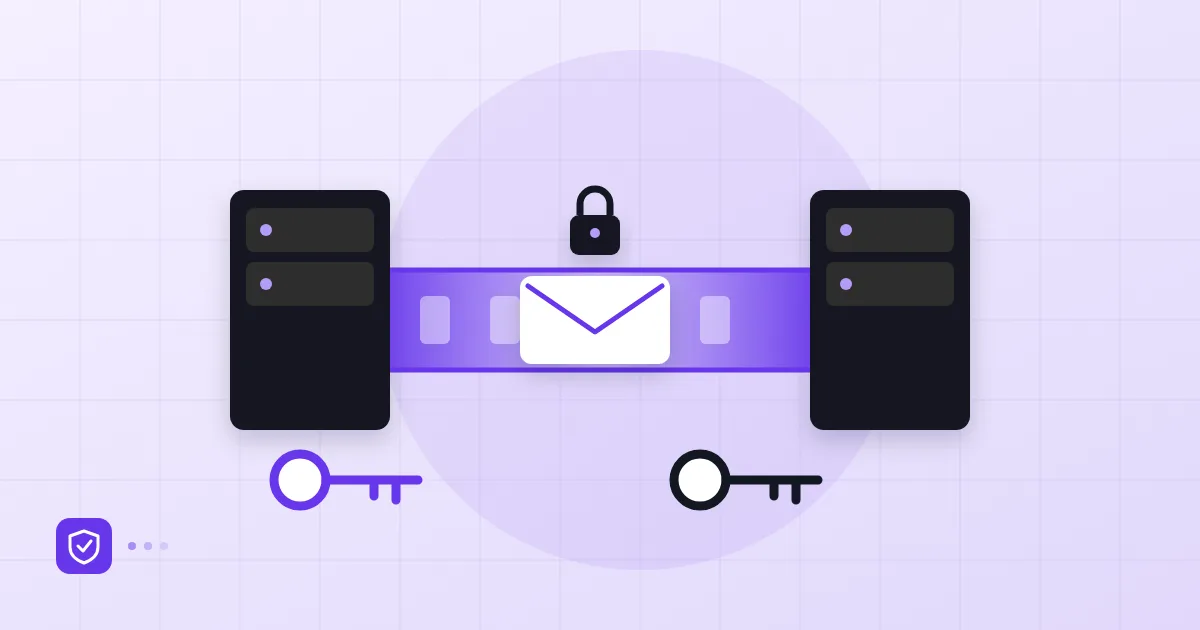
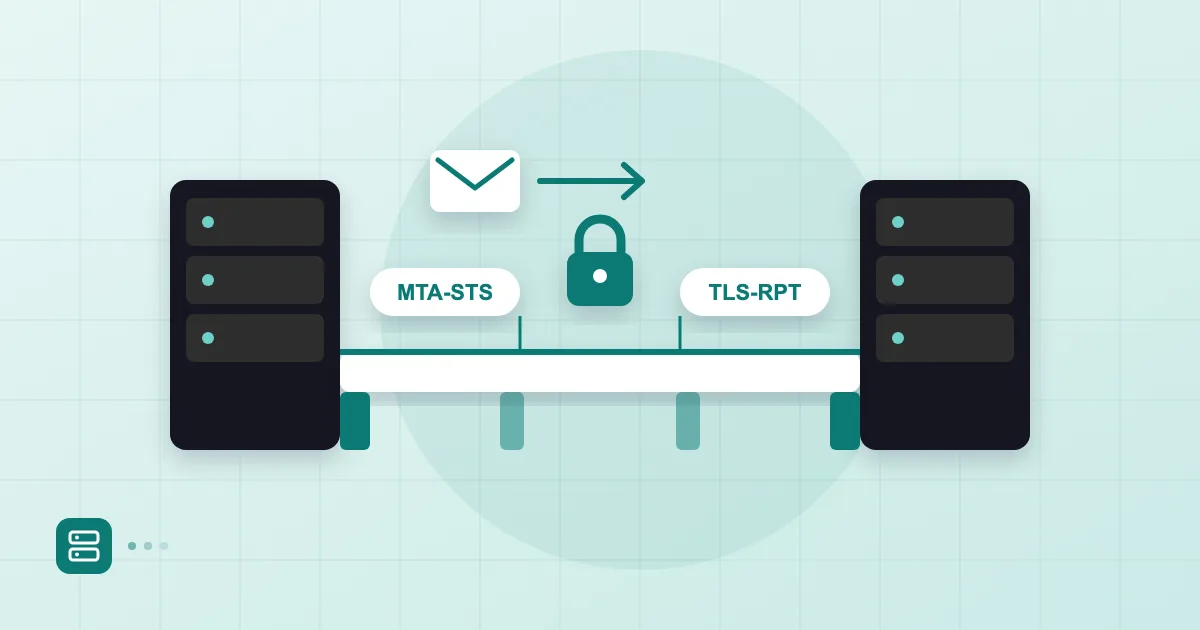
Transport (TLS). Server-to-server mail is mostly encrypted with STARTTLS, and the connection from a client to its server is protected by TLS. Because key exchange rests on public-key cryptography, this is the main target of harvest-now-decrypt-later. We see hybrid key exchange becoming common in browsers and at some CDNs; on mail servers it is moving more slowly. To make transport encryption mandatory, see our piece on MTA-STS and TLS-RPT.
End-to-end encryption (S/MIME, PGP). Messages encrypted to the recipient's key sit in the same category; we compare them in TLS, S/MIME and PGP differences. A recorded S/MIME message could be opened later.
Signatures (DKIM, S/MIME signatures). Here the picture differs. A signature proves who sent a message, and forging one only works if a quantum computer can break the key at the moment of verification. Breaking a DKIM signature recorded years ago does not help anyone forge a new message. What matters is rotating signing keys over time.
Storage. Encrypted mailbox storage relies on symmetric encryption and, as we saw, is comparatively less fragile against quantum attack. Where the data is kept is a separate matter, covered in our article on keeping email data in Turkey.
A realistic list for a small business
Let us turn this into an afternoon's worth of work without inflating it.
Start with an inventory. Which systems send or receive email, and which open encrypted connections to VPNs, your website or accounting software? The list will not be long. Next, sort your data by lifespan: what has to stay secret for ten years?
Third, keep everything current. A current TLS version, a current operating system and a current mail client are the easiest way to receive post-quantum upgrades as they ship. Switching off old TLS versions is good practice anyway. Fourth, do not neglect the basics: long before a quantum computer shows up, the email incidents that actually happen are phishing and stolen passwords. Our 12-point SMB email security checklist covers those foundations, and our piece on AI-driven phishing and BEC describes today's real threat. The quantum concern sits on top of that list; it does not replace it.
And do not burn your budget early: you do not need to choose algorithms, write your own encryption code or pay for the first product labelled "quantum safe". Some products are sold on inflated promises in this area. We ask which standard the claim rests on.
Questions to ask your provider
Keep the questions to your provider short and honest:
- Which TLS versions do you support for transport, and have you disabled the old ones?
- Do you have a roadmap for post-quantum or hybrid key exchange, and which standard is it based on?
- How is stored data encrypted and where are the keys kept?
- How often do you rotate signing keys such as DKIM?
"We are watching this and will follow the standards" is an acceptable answer. An absolute statement such as "fully quantum-proof" is a reason to ask for more detail. For our part, we make no post-quantum claim for Postanex; what we offer are existing features such as encrypted storage, DKIM-signed outgoing mail and a 2FA policy. If you are applying for cyber insurance, some of these questions may come up; our article on cyber insurance email security requirements summarises what insurers ask.
Frequently asked questions
Can quantum computers read my email today?
No. Today's quantum machines are nowhere near powerful enough to break the encryption in use. The risk is that encrypted traffic recorded now could be decrypted later.
What does "harvest now, decrypt later" mean?
An adversary records encrypted data today and decrypts it once a sufficiently powerful quantum computer exists. That is why the key question is how long the data must stay confidential.
Which post-quantum standards has NIST published?
In August 2024: FIPS 203 (ML-KEM), FIPS 204 (ML-DSA) and FIPS 205 (SLH-DSA). Standardisation of Falcon and HQC is still in progress.
What should a small business do today?
Take an inventory of systems, identify data that must stay secret for a long time, keep TLS and software current and ask your provider about its transition plan. You do not need to pick algorithms yourself.
- post-quantum
- cryptography
- NIST
- TLS
- email encryption