Google and Yahoo published their sender rules in early 2024. Microsoft followed for its consumer mail services in 2025. The details differ in scope, threshold and tone, but the core ask is the same across all three. We spend a good part of our week helping companies get mail accepted, so we put the rules in one place, along with the questions that come up again and again.
This article covers bulk sender requirements as far as we could confirm them on official pages. Rules get revised, so treat the links at the bottom as the source of truth and re-check thresholds before you rely on them.
Short answer: Google and Yahoo expect high-volume senders to pass SPF and DKIM, publish at least a p=none DMARC record, offer one-click unsubscribe on marketing mail and keep spam complaints low. Microsoft applies the same approach to Outlook.com, Hotmail and Live addresses from May 2025. Authentication is worth setting up whatever your volume is.
A short history: 2024 to today
Google's bulk sender requirements took effect on 1 February 2024. Yahoo released a comparable package in the same period. Microsoft announced its Outlook.com requirements and tied enforcement to 5 May 2025. Its announcement described non-compliant high-volume mail being routed to the Junk folder first; what happens after that is described differently depending on where you read it. So we will not tell you "mail is rejected from date X". We could not confirm that from an official source.
The table below uses only those three dates. We could not verify the intermediate dates some third-party blogs quote.
Who counts as a bulk sender?
A bulk sender is one that sends 5,000 or more messages a day to the receiving service. Google defines the threshold as messages per day to Gmail accounts, and Microsoft uses the same figure for its consumer services. Yahoo's page lists bulk-sender requirements separately but does not give a numeric definition; check its FAQ.
Why do small companies get this wrong? Three patterns show up again and again:
- The company sends its newsletter, its shop's order confirmations and its accounting tool's invoices from one domain. Each stream looks small. To the receiver, they are one sender.
- A single announcement goes to a big list on one day, and the threshold is crossed.
- Mail goes out through a marketing tool, with your domain in the From line, but the tool authenticates with its own domain and never aligns with yours.
Our advice is simple: comply even if you are far below the threshold. Yahoo's guidance already says every sender should use at least SPF or DKIM, so the threshold is no reason to postpone authentication.
Authentication requirements
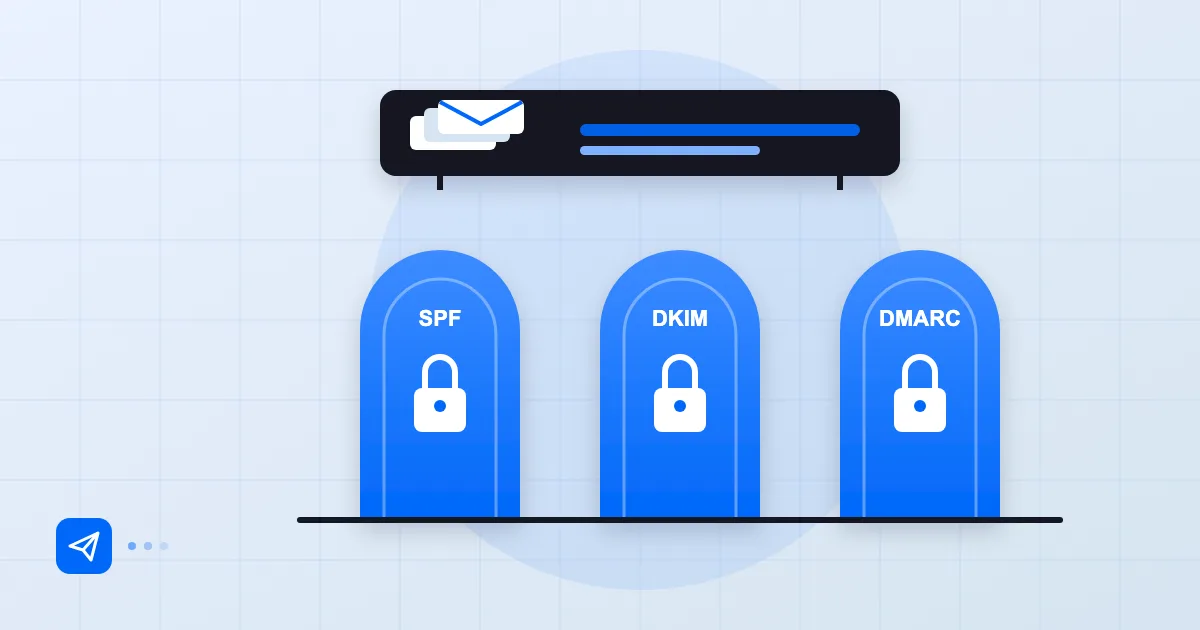
All three ask for the same foundation: SPF and DKIM pass, a DMARC record is published, and the From domain aligns with the SPF or DKIM domain.
| Requirement | Yahoo | Microsoft (Outlook.com) | |
|---|---|---|---|
| Effective | 1 Feb 2024 | Feb 2024 | 5 May 2025 |
| Threshold | 5,000+ a day to Gmail | Not defined on the page | 5,000+ to consumer services |
| SPF and DKIM | Both | Both (bulk senders) | Both |
| DMARC | At least p=none | At least p=none, must pass | Published, must pass |
| One-click unsubscribe | Marketing and subscribed mail | Marketing and subscribed mail | See source |
| Complaint rate | Aim below 0.10%, never 0.30% | Below 0.3% | See source |
We left the Microsoft cells marked "See source" on purpose. We could not confirm its current wording on those two points, and we do not print numbers we cannot verify.
Google adds a few more: valid forward and reverse DNS (PTR) for sending IPs, TLS for transmission, and a DKIM key of 1024 bits or longer when you send to personal Gmail accounts. We suggest 2048-bit keys.
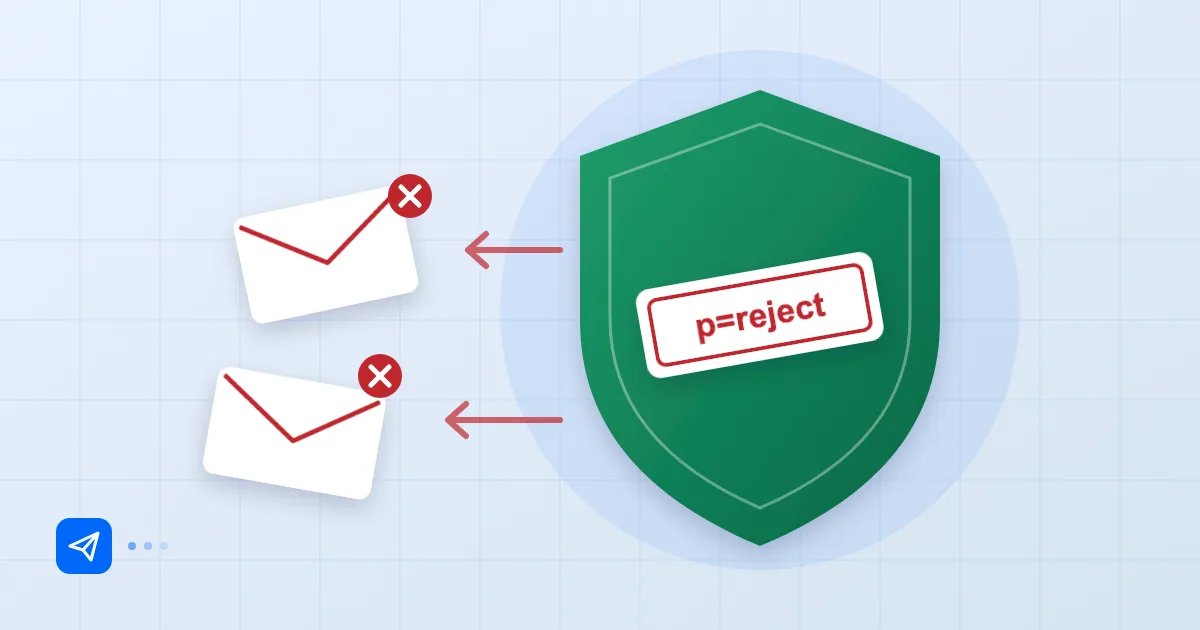
For the records themselves we have separate guides: how to write an SPF record, creating a DMARC record and, once reports look clean, moving DMARC to p=reject. We will not repeat them here.
Unsubscribe and complaint-rate expectations
Marketing and subscribed mail needs one-click unsubscribe. The standard behind it is RFC 8058: the message carries a List-Unsubscribe header and a List-Unsubscribe-Post: List-Unsubscribe=One-Click header, and both must be covered by the DKIM signature. The body also needs a visible unsubscribe link; Yahoo says it may lead to a preference page. Yahoo additionally expects unsubscribes to be processed within two days.
A mistake we see often: the header is there, but the link demands a login. A recipient clicks "Unsubscribe" in Gmail, an anonymous POST arrives at your server, and nothing handles it. The recipient then clicks "Report spam" instead. Test the unsubscribe endpoint without a session.
On complaints, Google recommends keeping the spam rate in Postmaster Tools under 0.10% and never reaching 0.30%. Yahoo's threshold is 0.3%. On a small list, one complaint moves the percentage a lot, so this is more about list hygiene than arithmetic. We cover the longer game in domain and IP reputation.
What rejections and quarantines look like
Failed authentication rarely vanishes silently. You usually get a bounce. At Gmail, a 550-5.7.26 response typically means the message failed SPF or DKIM checks. At Microsoft, the 550 5.7.515 error is documented as a rejection tied to Outlook.com's sender requirements.
The sneakier outcome is quarantine: no bounce, the message just lands in the recipient's Junk folder. Sales says "the customer never replies", and the customer never saw the mail. To work out which receiver is the problem, follow the diagnosis order in why emails go to spam.
Compliance checklist
If you can answer yes to every line, you are probably in good shape:
- Is your SPF a single published TXT record, within the 10-lookup limit?
- Does every sending system (mail server, newsletter tool, invoicing software) sign DKIM with your own domain?
- Does
dig TXT _dmarc.example.com +shortreturn av=DMARC1record? - Do marketing messages carry the RFC 8058 headers, and does the unsubscribe link work without a login?
- Do you actually look at your complaint rate in Postmaster Tools or an equivalent?
- Does the reverse DNS of your sending IP point to the right host name?
If you run company mail on Postanex with your own domain, outgoing mail is DKIM-signed and the panel walks you through the SPF, DKIM and DMARC records. Newsletter and marketing tools still need their own records added according to their documentation.
Official sources: Google sender guidelines, Yahoo sender best practices and RFC 8058 for one-click unsubscribe.
Frequently asked questions
Do these rules apply if I send fewer than 5,000 emails a day?
The full bulk-sender package is formally tied to the threshold. Even so, Yahoo asks every sender to use at least SPF or DKIM, and you do not want to be caught unprepared the day you cross the line. We recommend setting up authentication regardless of volume.
Is p=none enough for DMARC?
Google and Yahoo ask for at least p=none. But p=none only monitors; it does not protect. Reading the reports and tightening gradually is how you also stop spoofed mail.
Do transactional emails need one-click unsubscribe?
Google defines the requirement for marketing and subscribed messages. A password reset does not need an unsubscribe link. Mixing promotional content into transactional mail, on the other hand, invites trouble.
What happens if I do not comply?
Your mail may bounce or land in the recipient's Junk folder. The exact treatment varies by receiver; Microsoft announced Junk routing as the first step.
- bulk sender
- Yahoo
- Microsoft
- DMARC
- deliverability